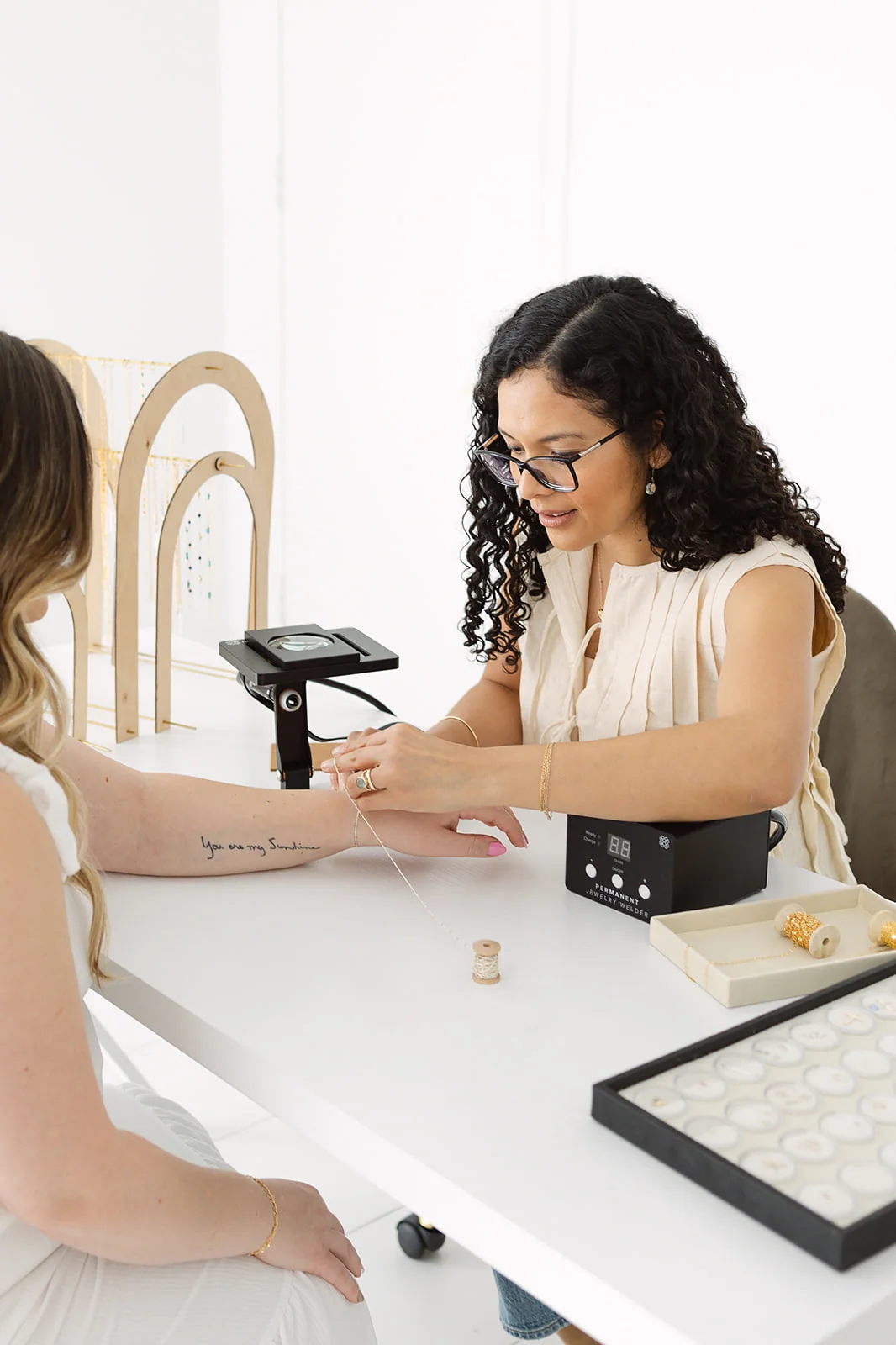
Permanent jewelry looks like a pretty simple business on social media: choose a chain, make a tiny weld, collect payment. And yes, the actual appointment can be quick. But there is an entire small business behind that little bracelet.
I built Bezalel & Co. from a creative project into a real jewelry business. I've worked markets, booked appointments, made thousands of pieces over the years, and spent plenty of time figuring out what was worth buying and what was not. If I had to start all over, this is the path I'd take.
1. Decide what kind of business you want
Do you want an occasional weekend side hustle, private-party bookings, or a full-time business? These are different models. A weekend pop-up requires transportation, setup, and market fees. Appointments require a place to host customers and a reliable booking process. Private parties require minimums and clear host communication.
My advice: pick one model first. You can expand later. Trying to do everything at once gets expensive fast.
2. Research your local market
Before applying to your first pop-up, visit it. Seriously. Look at who is shopping, what prices they are comfortable paying, whether similar vendors are there, and whether people actually stop to browse. A busy event does not automatically mean a profitable one—I learned that after years of vending.
Look at local competitors as research, not as a race to the bottom. Ask what kind of experience and quality you can offer that makes sense for your customers.
3. Handle the business basics
Check registration, permits, sales-tax collection, zoning, and event rules in your city and state. Speak with an insurance professional about the coverage you need for jewelry services and the locations where you'll work. Write down your refund, repair, and customer-care policies before your first event.
There's no single nationwide permanent jewelry license or training certificate that replaces this work. I explain the distinction in my certification guide.
4. Choose a welder you can learn well
A welder is your biggest equipment decision. I've used Sunstone Zapp and Helix-family equipment, and I'm a huge believer in choosing something with credible support, replacement parts, and instructions you can actually follow. I would rather know one machine extremely well than buy a mystery machine because a stranger said it was a bargain.
Read my welder buying guide before choosing. And remember: some welding accessories and setups are model-specific.
5. Buy a small, intentional chain assortment
I built my jewelry business around quality gold-filled and sterling silver. I still believe those materials make sense for a premium permanent jewelry experience. You don't need 40 chain styles to launch. Try a few textures and price points that you genuinely like, then reorder based on customer behavior—not what another artist says you have to stock.
Know your chain cost per inch, quality grade, and supplier policies. I also recommend starting with compatible jump rings and getting more than you'll need for practice.
6. Practice your welds before accepting customers
Practice is not optional. Develop repeatability with your exact welder, chain, and findings; inspect each join; perform the mechanical checks appropriate for your materials; and know when to stop and redo the connection. Follow all manufacturer-specific safety instructions, including eye protection.
A successful first attempt doesn't mean you're ready for a full line of customers. Build consistency first. Here are the mistakes I see beginners make.
7. Build a repeatable appointment experience
Create a simple flow: show chain choices and clear prices, discuss fit and preferences, explain the procedure, prepare the client and protective setup, make and inspect the connection, explain removal and aftercare, and collect payment. Keep notes on materials and repairs when appropriate.
If someone needs to remove a piece for work, a procedure, or personal preference, it should be easy to explain how to safely remove it. “Permanent” should never mean “impossible to take off.”
8. Set prices that cover the whole business
Your cost isn't just five or six inches of chain. It's also jump rings, processing fees, event fees, tools, maintenance, practice waste, marketing, insurance, your time, and profit.
At Bezalel & Co. I used different prices for different types of jewelry instead of charging one flat rate for everything. For beginners, I think clear, sustainable pricing is more important than being the lowest-priced artist at the market. See my pricing breakdown.
9. Start marketing before launch day
Show actual welds, explain what the jewelry is, answer common questions, and let customers see the chains. Short videos are perfect for this niche because the process is visually interesting. Post practical content rather than only “book now” graphics.
Create a simple landing page or booking flow, collect customer consent for photos, and make it easy to find your location and dates. For pop-ups, promote the specific event—not just your brand generally.
10. Review the numbers, then grow
After each event, record sales, material used, fees, time spent, and what sold. A booth that brought in $700 sounds great until you subtract inventory, the vendor fee, travel, processing, and your whole Saturday. Likewise, a small private party can sometimes be more efficient than a long market.
Once you understand your actual margins and demand, you can expand into private events, additional chain styles, and classes if you enjoy teaching.
What would I skip at the beginning?
I'd skip huge chain inventories, fancy displays before I knew my layout, unnecessary backup equipment, and expensive branding projects that don't help me learn to weld or find customers. Start lean, buy quality where safety and reliability matter, and let real customer demand guide the rest.
Your next step
I've organized my favorite supply categories and supplier recommendations on my permanent jewelry resources page. Download the free starter checklist, then browse the startup cost breakdown before ordering anything. A little planning now can save you a pile of regret later.
Business planning reference: See the Small Business Administration’s launch guide for local business requirements and insurance research.
Keep learning
Good technique and thoughtful business decisions begin with clear information. Browse the free supplier library, practical worksheets, and interactive tools.