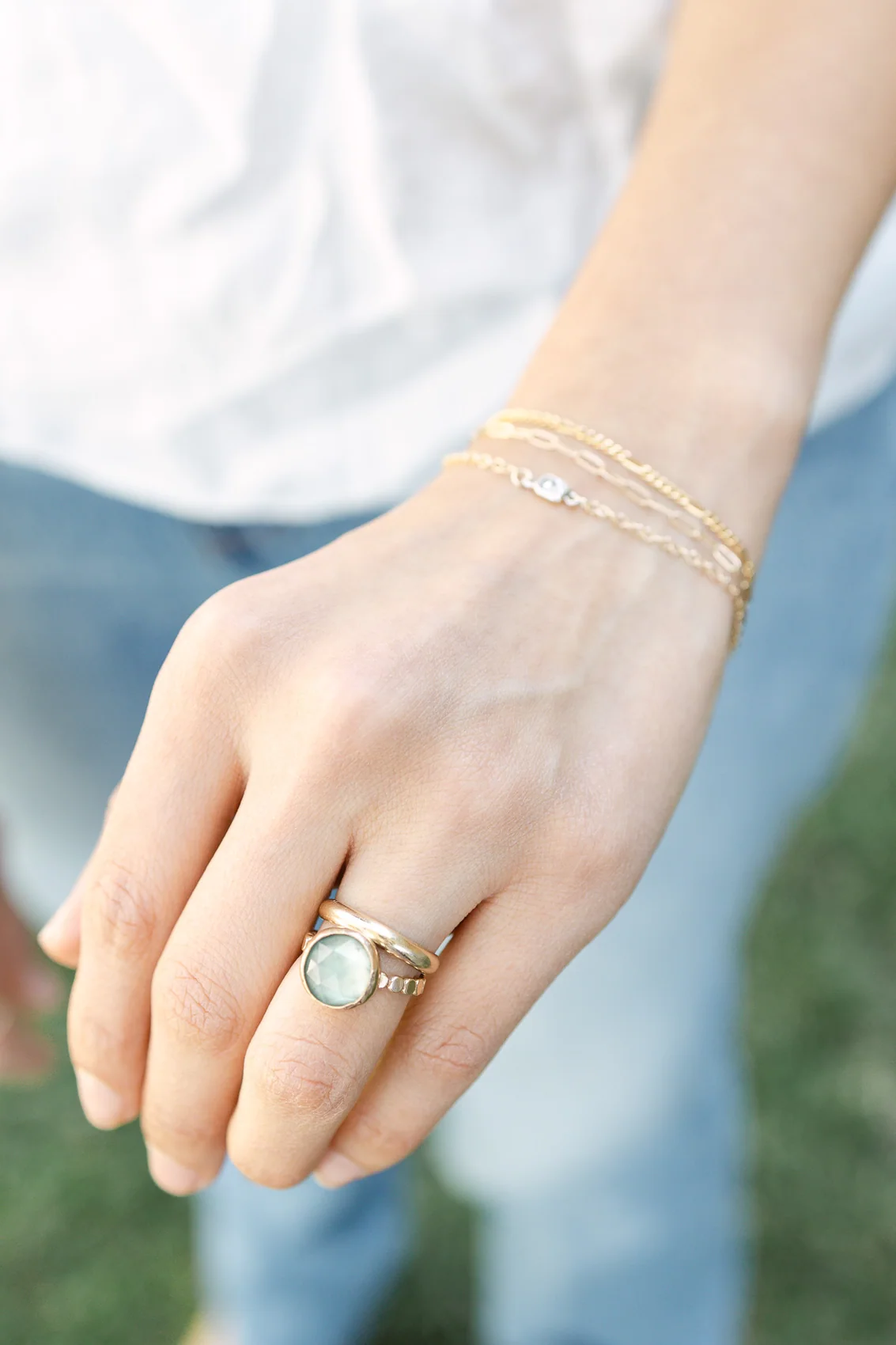
You've probably seen it on TikTok: someone chooses a chain, a jeweler fits it around their wrist, there's a tiny flash, and suddenly they have a bracelet with no clasp. That's permanent jewelry.
If your first thought is “Wait, are they welding something to your skin?”—no! I promise I get that question all the time. I spent years making permanent jewelry through Bezalel & Co., and I'm going to explain what it actually is, why people love it, and what to ask before you get one.
How does permanent jewelry work?
You choose a chain and the artist measures it for your wrist, ankle, or another appropriate location. Instead of closing it with a traditional clasp, the artist uses a specialized pulse-arc welder to join a small jump ring connecting the ends of the chain.
The metal connection is made around the jewelry finding, not by welding jewelry to a person's skin. A trained artist uses the correct safety protections for the equipment and checks the connection before the appointment ends.
The result is a custom-fitted piece designed to stay on during normal daily wear until you decide to remove it or it breaks.
Is it really permanent?
Not in the literal sense. It's better to think of it as clasp-free. You can remove it by cutting the appropriate connecting ring or chain with a suitable tool if needed. Some pieces can later be reattached or repaired depending on the material and condition.
That's important for jobs with jewelry restrictions, sports, medical procedures, or simply changing your mind. Never assume you must leave jewelry on when someone asks you to remove it.
Does getting permanent jewelry hurt?
The joining process should not involve piercing or welding the skin. The arc does create light and heat, so professional protective procedures and correct fitting matter. Choose an artist who can clearly explain their equipment, protective setup, and how they check the weld.
I don't recommend welding permanent jewelry on children. For younger jewelry lovers, a clasped bracelet offers the same custom look without the permanence or welding procedure.
How much does permanent jewelry cost?
Prices depend on the chain material, design, length, location, and the artist's costs. In my own business, bracelets commonly started around the $50 range, with more elaborate styles and other pieces priced higher. That reflects a particular business and period, not a national price survey.
When comparing prices, ask what the metal actually is. Gold-filled, sterling silver, stainless steel, gold-plated, and solid gold are different products. A lower price isn't inherently bad, but the material should be accurately disclosed.
How long does it last?
There's no guaranteed lifespan. It depends on the chain, metal, connections, daily activities, snagging, wear, and care. Some people enjoy a piece for a long time; others catch a delicate chain on something and break it sooner.
A securely welded jump ring doesn't make the entire chain unbreakable. That's one reason I tell customers to choose materials and designs that suit their lifestyle and to understand the artist's repair policy.
Can you shower, swim, or exercise in it?
Everyday exposure varies by metal and finish. High-quality gold-filled and sterling silver can be suitable for regular wear, but care requirements differ. Sterling can tarnish; chemicals, abrasion, and pools can affect materials and finishes. Ask the artist for care instructions for your specific piece and rinse/clean according to the supplier's guidance.
What are the most popular permanent jewelry styles?
Bracelets are probably the easiest to recognize, but people also get anklets, necklaces, hand chains, and sometimes rings or other custom pieces. I love how one base chain can become a very personal design with thoughtful fit and optional charms or connectors.
It also makes a fun shared experience—friends, sisters, partners, and family members choose pieces together as a little reminder of an occasion.
What should I ask before booking?
- What exactly is the chain made of?
- What does the price include?
- How do you protect the customer during welding?
- What happens if my bracelet breaks?
- How can I remove it safely if necessary?
- What are the cleaning and care instructions?
A good artist should be able to answer without making you feel silly for asking.
Interested in offering permanent jewelry yourself?
I closed the retail chapter of Bezalel & Co., but I still love helping creative business owners learn from my experience. Start with my guide to launching a permanent jewelry business, or browse my favorite tools, chain suppliers, and beginner resources.
Whether you're getting your first bracelet or considering becoming an artist, the details matter. My favorite permanent jewelry has always been the kind that's beautiful and made with care.
Manufacturer reference: Sunstone’s permanent jewelry safety and care FAQ explains the clasp-free process and the use of protective equipment.
Keep learning
Good technique and thoughtful business decisions begin with clear information. Browse the free supplier library, practical worksheets, and interactive tools.