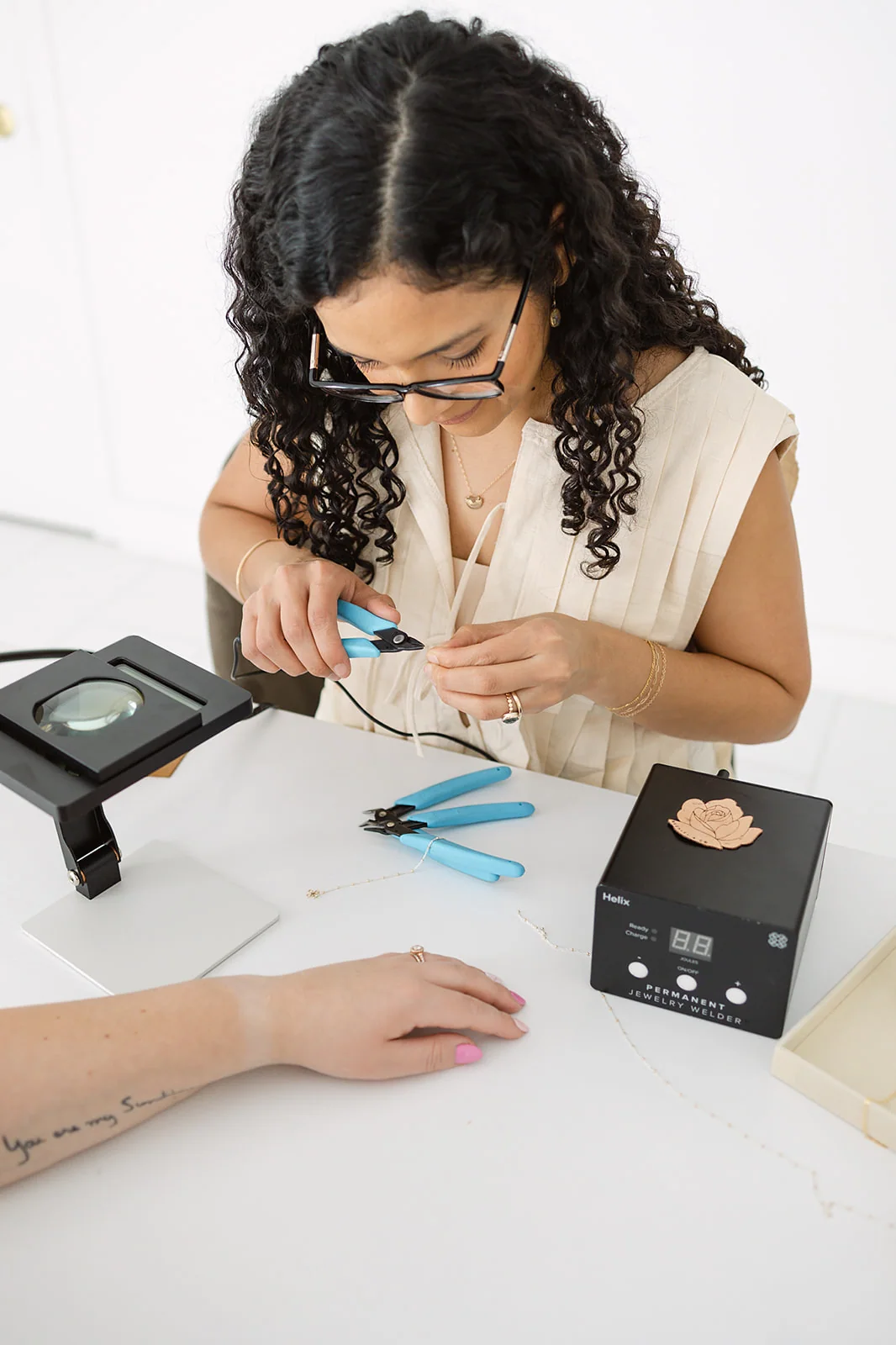
What's the best permanent jewelry welder? I get why this is one of the first questions people ask. The welder can be the most expensive part of starting the business, and nobody wants to realize two weeks later that they bought the wrong machine.
Let me start with the most useful disclosure: I've personally worked with Sunstone Zapp/Zapp Plus and Helix-family equipment. I'm not going to pretend I've tested every welder on the market or rank machines I've never touched. This guide is about what I would look for and what has mattered in my actual jewelry business.
What does a permanent jewelry welder need to do?
A suitable micro pulse-arc welding setup must create repeatable connections on the findings and materials you plan to use. It also needs the correct viewing and safety equipment, reliable grounding, accessible consumables, and instructions that make sense for your setup.
A beautiful marketing photo is not a specification. Make sure you're comparing actual machine capabilities, included components, warranty and service arrangements, and the manufacturer's approved uses—not just a bundle name.
Sunstone Zapp / Zapp Plus: why I liked working with it
I got my start in permanent jewelry using Sunstone equipment. I appreciate a straightforward machine that lets me focus on the connection and the customer. For a beginner, the real value isn't a flashy feature list; it's a setup you understand and can practice with until your results are predictable.
My advice is to compare the specific Zapp model being sold now against the current accessories and safety equipment included. Product versions and bundles change. Confirm compatibility before using settings or tips from someone's older video—including mine.
A smaller or simpler machine may be perfectly reasonable for your business model. If you're doing occasional appointments, you may not need the same workflow as an artist who is welding continuously at high-volume events.
Helix-family equipment: why the viewing setup matters to me
I have also used Helix-family welders and have spent a lot of time thinking about the viewing experience. I personally like a practical, well-positioned magnification or viewing setup that lets me see the small connection clearly while keeping my workstation comfortable.
If a seller offers a Helix configuration with magnification or an adjustable viewing accessory, evaluate that whole package. A more expensive setup is only worth it if the features improve your real workflow. Compare weight, table footprint, visibility, portability, accessories, and support before purchasing.
My actual checklist when comparing welders
| Question | Why it matters |
|---|---|
| Does it officially support the materials and findings I want to use? | Welding consistency begins with compatibility. |
| What protective viewing equipment is required and included? | Safety is nonnegotiable. |
| How easy is it to replace electrodes or other consumables? | Downtime at an event costs money. |
| What warranty and support are provided? | You need a path to troubleshooting. |
| How portable is the complete setup? | Markets and private parties can involve lots of moving. |
| Can I practice and grow into it? | A familiar machine is better than a complicated one you never master. |
| What is the total price of a working setup? | The lowest advertised machine price can mislead. |
Is a cheap welder okay?
Price alone does not tell you whether a product is appropriate. But I would be cautious about no-name machines with unclear specifications, poor safety guidance, or no accessible manufacturer support. Permanent jewelry involves working close to a person's skin. This isn't an area where I would choose equipment solely because it's trending or costs the least.
If your budget is limited, buy fewer chains and decorations rather than compromising on an adequately supported setup and proper protection.
Which would I buy first?
I'd choose a current, manufacturer-supported Sunstone or Helix-family option that fits my budget, work volume, and preferred viewing setup. If possible, compare the machines in person or watch detailed demonstrations from someone who owns the exact model. Don't assume someone else's weld settings or electrodes will transfer directly to your machine.
I also recommend choosing a training resource based on the actual equipment you'll use. Getting advice for an unrelated machine can be confusing—and sometimes unsafe.
Don't forget the rest of the budget
The welder is not the whole business. Set aside money for proper accessories, quality chain, jump rings, maintenance, practice materials, and business overhead. I walk through that in my startup cost guide.
Where to research machines: Browse my welder and tool shopping guide, which separates equipment I've actually used from general supplier options. I may receive a commission on some recommendations when a tracked affiliate link is available, and I always want you to compare the current product specifications yourself.
Safety reference: Sunstone’s permanent jewelry safety guidance explains eye protection around the welding arc. Always use the current guidance for your specific machine.
Keep learning
Good technique and thoughtful business decisions begin with clear information. Browse the free supplier library, practical worksheets, and interactive tools.