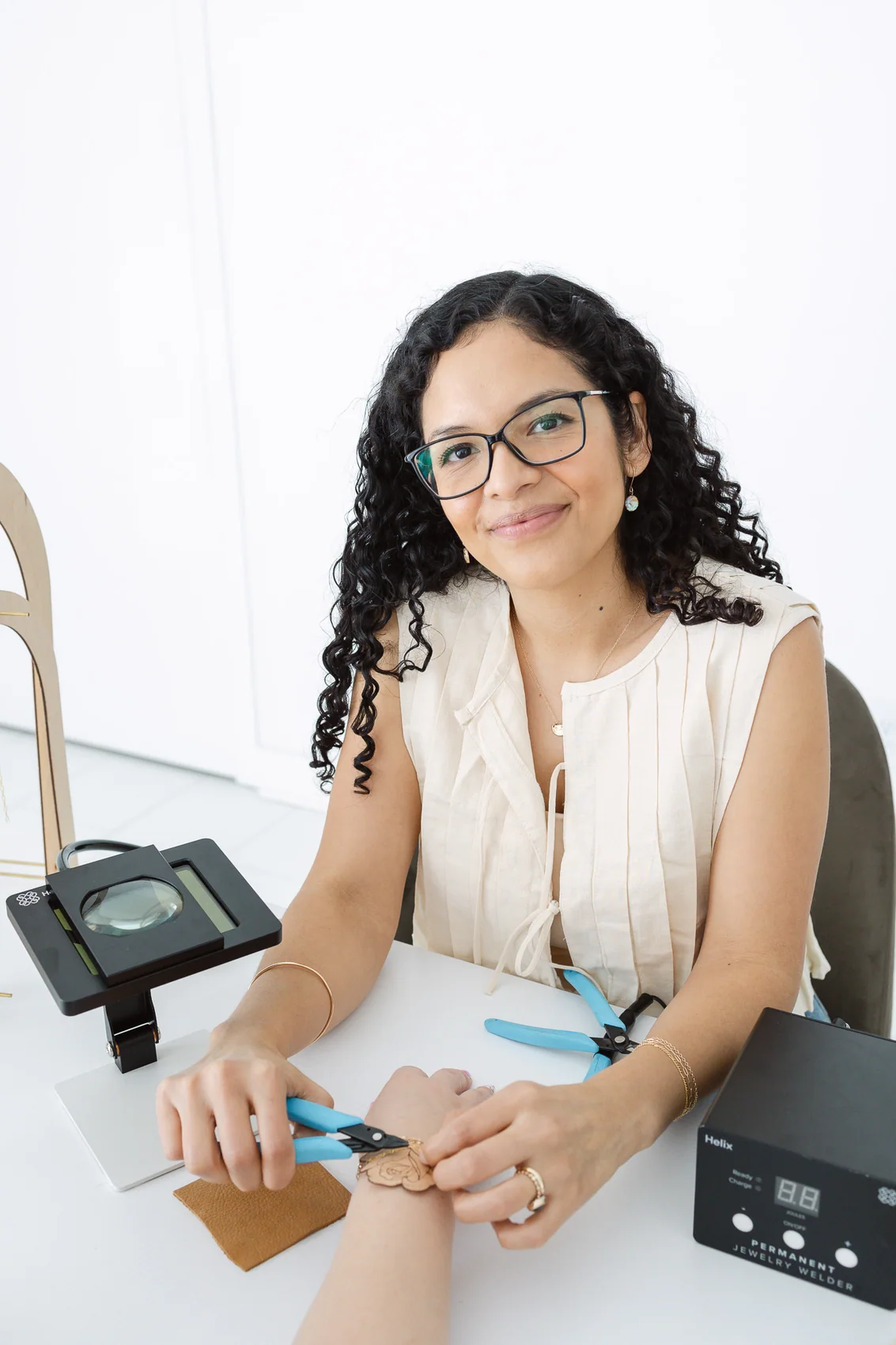
Whenever someone asks me what they need to start permanent jewelry, I want to say two things at once: you don't need to buy everything and please don't cheap out on the equipment and materials that matter.
I've purchased a lot of tools over the years at Bezalel & Co. Some became workhorses. Others seemed necessary because everyone online had them and then just sat in a drawer. Here's the realistic shopping list I wish I had when I started.
The actual essentials
1. A supported pulse-arc welder
This is your big purchase. I've personally used Sunstone Zapp and Helix-family equipment, which is why those are the systems I can speak about with confidence. Look for manufacturer support, clear instructions, safety guidance, available accessories, and a fit for your planned workload. Verify what comes in the box; brands sell different packages.
Please don't assume the lowest list price is the final cost. You may need a compatible viewing system, grounding accessories, protective equipment, or other machine-specific items.
2. Proper viewing and safety equipment
A welder creates an arc. That means you need the eye protection and safety setup specified by its manufacturer, not ordinary sunglasses or an improvised solution. Protect the customer as directed, keep hair and flammable items clear, and understand your equipment before practicing on people.
I like a comfortable viewing setup because permanent jewelry involves tiny details and repetitive work. The right magnification can make a long event more comfortable, but check compatibility before purchasing an expensive add-on.
3. Quality chain in a few versatile styles
I prefer 14K gold-filled and sterling silver for permanent jewelry. Start with a small assortment: a dainty everyday chain, a textured option, and a slightly more substantial style in each finish. Your goal isn't to impress other artists with inventory; it's to offer customers a clear, beautiful selection.
Ask suppliers about the metal specifications, pricing by length, minimum order, and return rules. As you learn what sells, purchasing larger quantities can reduce your effective cost per foot.
4. Compatible jump rings and findings
The jump ring is a tiny piece with a big job. Buy reliable, compatible findings and enough inexpensive practice rings to repeat the process hundreds of times. In my training, I often emphasize 22- and 24-gauge sterling silver jump rings as useful practice materials—but choose actual customer materials based on your welder and supplier's guidance.
Don't mix mystery alloys just because they look similar. Material compatibility and your weld setup matter.
5. Precision hand tools
You will want comfortable pliers, quality flush cutters, tweezers or positioning tools suitable for your setup, a measuring tape or bracelet-sizing tool, and a way to organize your small findings. Xuron and Pepe Tools are among the tool names I've worked with or recommended in my content.
Buy tools that fit your hands and give you control. You don't need a giant metalsmithing bench to do a clean, careful permanent jewelry appointment.
6. Consumables and maintenance supplies
Check your manufacturer's recommended electrodes, cleaning methods, and maintenance supplies. A dirty or worn electrode can affect your results; learn the appropriate way to inspect and maintain it. Keep spare compatible consumables if you plan to work events where a missing part could end the day.
7. A basic selling setup
You need a secure way to display chains, clearly labeled prices, a payment method, a clean work surface, good lighting, and a portable organization system. For pop-ups, add transportation considerations, table coverings, and any vendor-required equipment.
Nice to have—but not day-one purchases
A premium display system, 40 chain styles, every charm trend, a huge inventory of expensive connectors, and specialized storage furniture can all wait. So can a second welder if you haven't even established consistent demand and a real financial case for one.
I love beautiful tools and displays. But a beginner's money is usually better spent on safety, practice materials, and chains that customers will actually buy.
Where I would shop
For my own jewelry work I've used or researched suppliers including Pepe Tools, Rio Grande, Sunstone, Gem Packed, and Imprinted Supplies. Each serves a slightly different purpose. I recommend comparing specifications and shipping costs rather than assuming one supplier is always cheapest.
My shopping lists and equipment guide organize these by welders, chain, findings, and bench tools. Any commission relationships are disclosed where recommendations appear.
The simple starter checklist
- Supported welder and compatible accessories
- Correct protective eye and client-safety equipment
- A few gold-filled and sterling silver chains
- Compatible jump rings plus inexpensive practice findings
- Pliers, cutters, measuring tools, and organizers
- Approved consumables and maintenance supplies
- Basic display, payment, and appointment workflow
- Required business registration, taxes, and insurance research
What I'd do before clicking checkout
Make two columns: “needed to weld safely and consistently” and “nice when business grows.” Buy the first category; delay the second. Then check my startup budget guide so you understand the full investment, not just the price of a welder.
Get the free checklist: Download my permanent jewelry starter checklist. And when you're ready to research brands, head to all my permanent jewelry shopping lists.
Keep learning
Good technique and thoughtful business decisions begin with clear information. Browse the free supplier library, practical worksheets, and interactive tools.